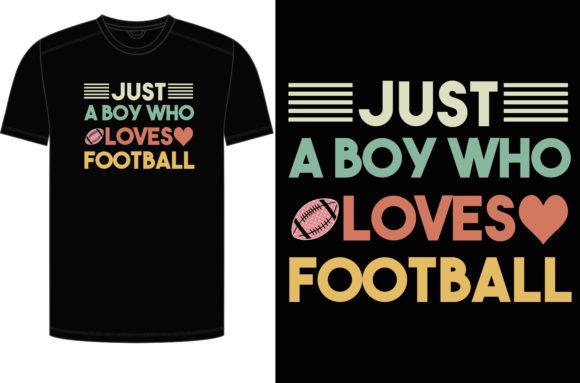
Reviewing the Just a Boy Who Loves Football Design
As a designer who has spent countless hours staring at digitized files and troubleshooting thread breaks, I approach every new T-Shirt Designs asset with a mix of curiosity and skepticism. We have all been there: you download a file that looks crisp on the screen, only to find it turns into a tangled mess of satin stitches on actual fabric. Recently, I took a close look at the Just a Boy Who Loves Football T-shirt graphic to determine if it holds up under the needle. This is not just about aesthetics; it is about functionality, durability, and how well it translates from a digital concept to a tangible, stitched reality.
The first impression of this design is its inherent charm. It captures a specific mood—nostalgic, playful, and deeply personal. For those of us in the craft business, mood is half the battle. When a customer sees a design, they are not just buying an image; they are buying a feeling. This particular piece leans heavily into the narrative of childhood passion. The layout feels balanced, avoiding the cluttered look that often plagues amateur Graphics. From a reviewer’s standpoint, the visual personality suggests it belongs on soft, comfortable items rather than stiff, formal wear. It naturally calls for placement on a cozy sweatshirt or a well-loved tote bag.
Real-World Application and Stitching Potential
To truly evaluate the Just a Boy Who Loves Football T-shirt design, I imagined a specific client scenario. A local boutique owner approached me with a request for a line of personalized gifts for the upcoming holiday season. She wanted items that felt handmade but looked professional. I considered using this design for a custom embroidered sweatshirt intended for a young nephew who lives and breathes the sport. The theme fits perfectly here. However, the transition from a vector file to a machine embroidery design requires careful planning.
If you are planning to use this as a digital embroidery file for your own projects, you must consider the stitch types involved. While the source material comes in SVG, PNG, EPS, and AI formats, these are primarily cut files or print graphics. To turn this into a high-quality embroidery file, you need to ensure the digitization respects the original lines. If the design relies heavily on thin lines, a running stitch might get lost on textured fabrics. Conversely, if the shapes are bold, a fill stitch could provide the necessary coverage and durability. For an applique design, this graphic offers excellent potential. You could use a contrasting fabric for the football element, securing it with a tight satin border, which adds texture and reduces the overall stitch count on the garment.
I also tested the concept mentally for a tote bag design. Canvas is a sturdy fabric that handles higher stitch density well. Placing this motif on a heavy-duty bag creates a striking contrast between the rugged material and the sweet sentiment of the text. It transforms a simple utility item into a cherished personalized gift. Similarly, for baby embroidery, the scale matters. You would need to resize the design significantly to fit a onesie or a small bib. In these cases, simplifying the details is crucial to prevent the stitches from puckering the delicate fabric.
Navigating Fabric and Hoop Constraints
One of the most critical aspects of using any design assets is understanding where they fail. The Just a Boy Who Loves Football T-shirt design is not universally applicable without adjustment. For instance, placing it on a curved surface like a cap requires meticulous hooping and stabilization. If the design includes small lettering, those tiny curves can become illegible if the needle jumps too much or if the thread tension is off. On stretchy fabrics, such as performance jerseys, the design needs a robust stabilizer to prevent distortion during washing.
Dark fabrics present another challenge. If you are stitching on a navy or black custom apparel piece, you must check your thread colors for sufficient contrast. A dark brown thread on a black shirt will vanish. I always recommend testing the design in black and white mockups first to ensure the silhouette remains clear. Additionally, be wary of dense stitch areas. If the digitized version packs too many stitches into a small space, it can cause the fabric to pucker or tear, especially on thinner materials like tri-blend t-shirts. Always confirm the hoop size compatibility before starting your project. A design that fits perfectly in a 5x7 hoop might be cramped in a 4x4, leading to trimmed edges and a unfinished look.
Commercial Viability and Brand Trust
For Etsy sellers and small shop owners, the quality of your finished product directly impacts customer trust. Using a well-executed version of this design can enhance your brand consistency. It signals that you pay attention to detail and care about the end user’s experience. When customers receive a high-quality embroidered patch or a neatly stitched apron, they are more likely to leave positive reviews and return for future purchases. This design, when executed correctly, adds value because it taps into emotional connections. It is not just a football; it is a memory.
However, commercial use requires diligence. Before selling items made with this graphic, you must verify the licensing terms. Since the product description mentions it is a digital download in various formats, it is essential to confirm whether the license covers physical sales or if it is strictly for personal use. Many creators assume that buying a file grants unlimited commercial rights, but this is rarely the case without explicit permission. Check the seller’s policy regarding commercial embroidery projects to avoid legal issues down the line.
Practical Notes for the Embroiderer
Before you load this design into your machine, take a moment to prepare. Test the design on scrap fabric that matches your final project material. This simple step saves time and materials. Inspect the small details of the digitized file. Are the corners sharp? Is the text legible at the intended size? Compare how the design looks on light versus dark backgrounds. Use the appropriate stabilizer for your fabric type—cut-away for stretchy knits, tear-away for stable wovens.
In conclusion, the Just a Boy Who Loves Football T-shirt design offers a strong foundation for various embroidery projects. Its strength lies in its emotional resonance and versatile layout. Whether you are creating holiday embroidery for family gifts or stocking your small shop product lineup, this graphic can shine if handled with technical precision. Respect the fabric, choose your threads wisely, and always prioritize clarity over complexity. With the right approach, this design can become a standout piece in your portfolio, delighting customers and enhancing your reputation as a skilled maker.